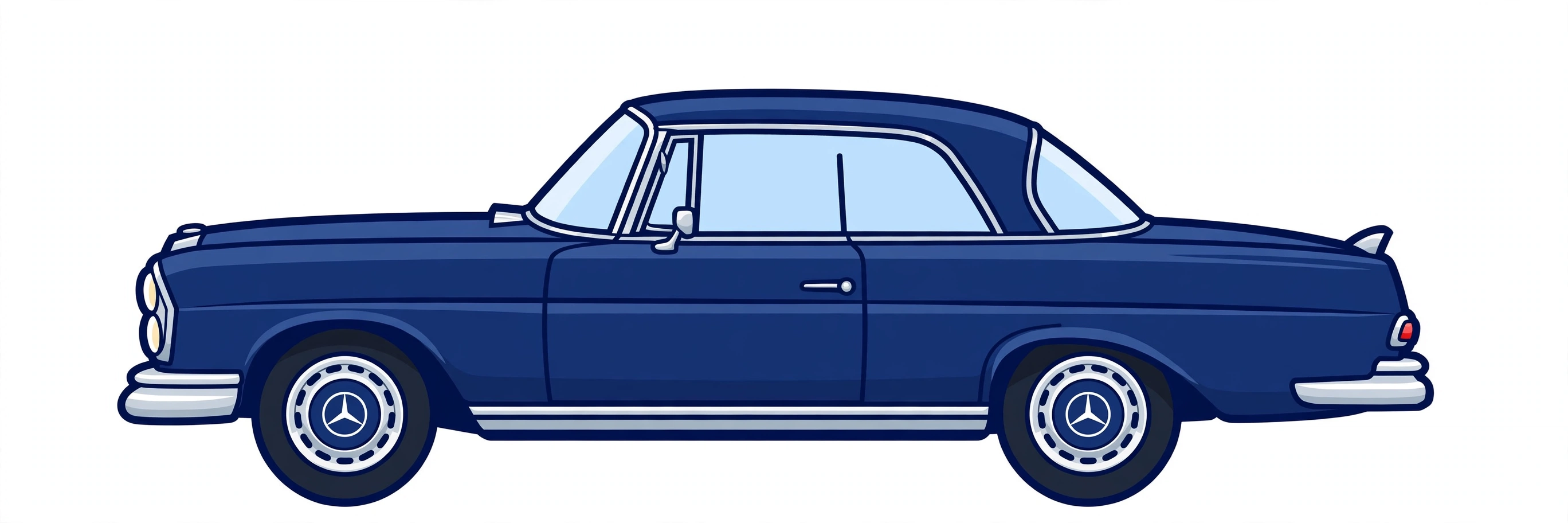
Mercedes-Benz W123 buyer's guide
The benchmark Mercedes — nearly 2.7 million built, bought on condition.
Years: 1976–1985 · Models: 200, 230, 230E, 280E, 200D, 240D, 300D, 300CD, 300TD and the other diesels
Overview
The W123 is the car that fixed Mercedes' reputation for durability in the public mind: sedans, coupes, and the company's first factory estate car (the T-model), in petrol and diesel forms, built from 1976 to 1985. Production was enormous and so is survival — which means the market is really two markets: ordinary used cars, and exceptional, documented, low-mileage examples that collectors now pursue.
Engines
Petrol fours and the twin-cam 2.8 six (M102, M115, M110); the OM616 four-cylinder and OM617 five-cylinder diesels, the latter also turbocharged in later US cars.
What to check
- Rust at the jacking points, sills, battery tray, front inner wings, and rear subframe mounts; on estates, the tailgate and rear arches.
- The vacuum central locking and, on diesels, vacuum-related running faults — one leak produces many symptoms.
- On estates, the rear self-leveling suspension: check that the car sits level and the system holds height.
- Diesel compression and cold starting, and injector-pump leaks; on petrol cars, K-Jetronic hot-start behaviour.
- The push-button climate control unit on later US cars, and perished window and door seals throughout.
Values
Estates (above all the 300TD) and coupes lead the market, followed by genuinely low-mileage, documented sedans of any engine. The premium for the best cars over ordinary ones is large and widening — paperwork and preservation are what is being bought.
Buying tips
Because supply is deep, be patient and buy condition. A cold start and a look at the jacking points will eliminate most W123s quickly; the right car is the one with records and original paint, not the one with the longest options list.
See the 40 W123 cars currently listed.